Quick answer
Before winter, give the car a thorough wash and put fresh protection on the paint: a wax or ceramic sealant at minimum, or a ceramic coating if you want it to last for years. Then rinse road brine off within a few days of each storm, put down all-weather floor mats, and fix cloudy headlights, since it's dark by about 5:10 p.m. in early December.
People hear "Charlotte winter" and figure it's nothing. Most years we only see a few inches of snow; the city averages about 3.5 inches a year, according to WCNC. But snow isn't what wears on a car here. It's the brine and salt on the roads, weeks of cold rain, red clay tracked onto the carpet, and a lot of driving home in the dark.
Here's what we tell customers to do before winter, and what to keep up with until spring.
What a Charlotte Winter Actually Does to Your Car
Road brine and salt
When a storm is coming, NCDOT pre-treats the roads with brine, a mix of water and salt. Before one storm in January 2026, crews put down about 183,250 gallons of it on roads in the Charlotte region, then followed up with salt, according to NCDOT. That's great for the roads and not so great for your car. Brine kicks up onto the wheels, lower doors, and underside, and dries into a gritty white film that holds moisture against the metal.
Cold rain and road film
Most of our winter is gray and wet. Rain mixed with road grime leaves a dull film on the paint. Without protection on it, that grime bonds to the clear coat and gets harder to wash off every week.
Red clay and wet carpet
Muddy shoes, wet jackets, and kids hopping in from the yard put red clay and water right into the carpet. Carpet that never fully dries starts to smell, and the windows fog up from the inside.
Short days
Charlotte's earliest sunset of the year is around 5:10 p.m. in early December, per WeatherSpark. That means a lot of commuting in the dark, which is exactly when foggy, yellow headlights hurt the most.
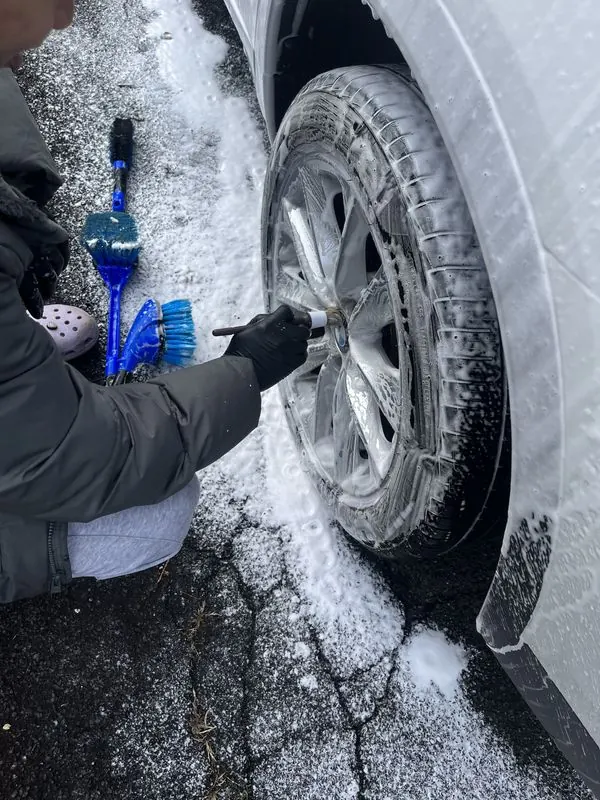
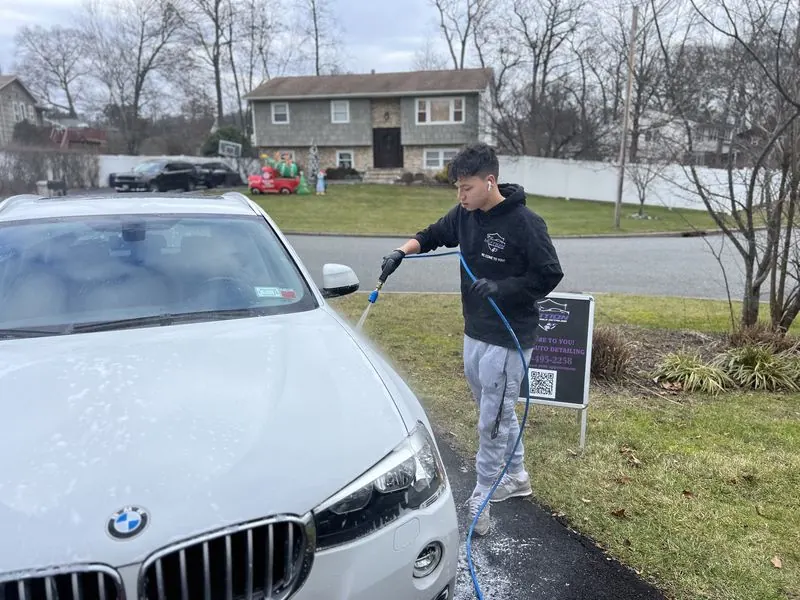
Want it handled before the cold sets in? We'll wash and protect the car in your driveway, with our own water and power.
How to Protect Your Car Before Winter, Step by Step
1. Start with a real hand wash
Get the summer and fall grime off first: bugs, tree sap, leftover pollen, and road film. A premium hand wash is the minimum. If the paint still feels rough when you run your hand over it inside a plastic sandwich bag, it needs a clay bar, which is part of our wash and wax.
2. Put protection on the paint
This is the most important step. A layer of wax or ceramic sealant gives brine and road grime something slick to sit on instead of your clear coat, so it rinses off. A wash and wax lasts a few months, which covers most of a Charlotte winter. A ceramic coating lasts for years and makes every winter wash faster. Not sure which one fits? We broke it down in wax vs. ceramic sealant vs. ceramic coating vs. PPF.
If the paint is already swirled or dull, paint correction before a coating means you lock in a clean finish instead of sealing in the swirls.
3. Don't skip the wheels
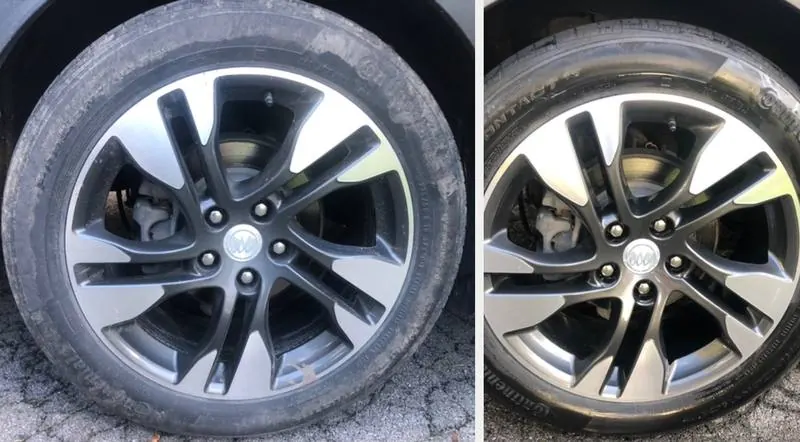
Brake dust and brine bake onto wheels fast. Clean the faces and the barrels, dress the tires, and the wheels will shed grime much more easily all season.
4. Get the inside ready
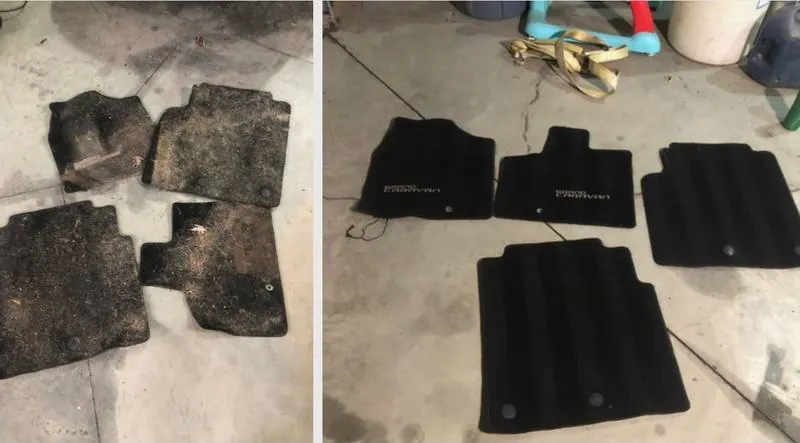
Swap in rubber or all-weather floor mats if you have them. If the carpet is already stained from the fall, a full interior detail with hot-water extraction gets it clean before winter adds more. Already in good shape? A mini interior detail keeps it that way. And clean the inside of the windshield. That hazy film on the glass is what fogs up and glares at night.
5. Check your headlights
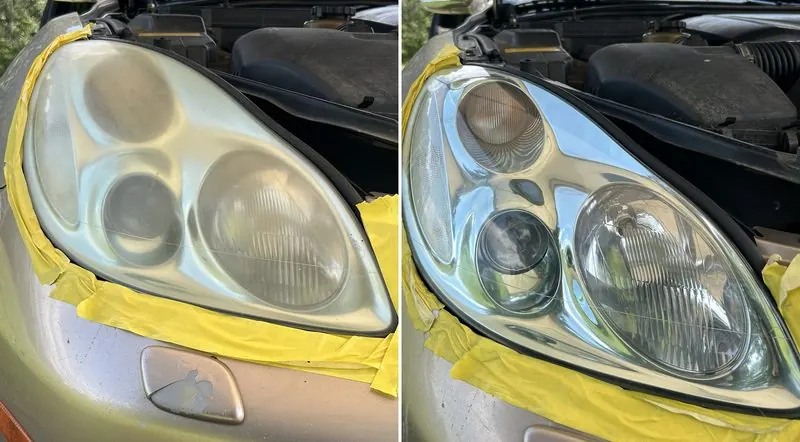
If the lenses are yellow or cloudy, fix them before the long, dark drives. Headlight restoration is $95 a pair with us. Here's more on why foggy headlights are worse in winter.
6. Clear out under the hood
Leaves and pine needles pile up around the base of the windshield and under the hood in the fall. Clearing them helps water drain the way it's supposed to. If the engine bay is grimy, an engine cleaning takes care of it safely.
How to Take Care of Your Car During the Winter
- Rinse off brine within a few days of a storm. Focus on the wheels, the lower doors, and behind the tires. Don't let it sit for weeks.
- Wash when it's above freezing. Pick a dry afternoon so the car can dry before the temperature drops, and wipe the door jambs so the seals don't freeze.
- Keep ice scrapers on the glass. Use the defroster and a plastic scraper on the windows only, never on the paint.
- Skip the brush car wash. Those brushes carry grit and salt from every car that went through before yours.
- Knock the mud off before you get in. Pull wet mats out to dry when you can.
Why Late Fall Is a Good Time for a Ceramic Coating
Ceramic coatings need dry conditions to cure, so we plan every coating around the weather. Fall in Charlotte usually brings plenty of dry, mild days, and a coating that goes on now is already working when the brine shows up in winter and the pollen hits in spring. If you've been on the fence, read is ceramic coating worth it in Charlotte?
We Winter-Prep Cars All Over the Charlotte Area
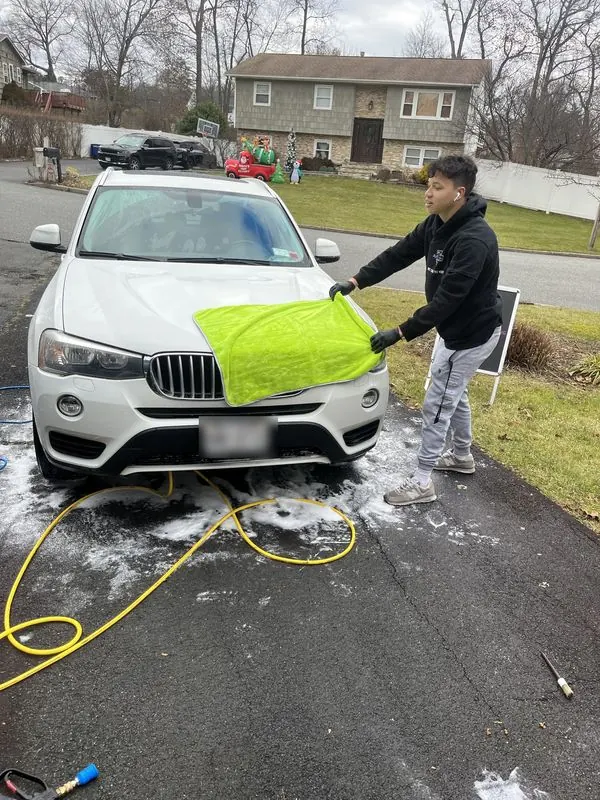
We come to you with our own water and power, so we can get your car ready for winter in a driveway, an office lot, or an apartment parking spot. In Charlotte, that includes Ballantyne, SouthPark, Quail Hollow and Carmel, and Dilworth and South End. North of the city, we're in Huntersville, Cornelius, Mooresville, Concord, and Kannapolis, and to the west, Gastonia. Down through Union County, we cover Matthews, Mint Hill, Indian Trail, Monroe, Weddington, Wesley Chapel, and Waxhaw. Across the state line, we detail in Fort Mill, Tega Cay, Indian Land, and Rock Hill. We're also now serving Greensboro and Raleigh. See every town on our service areas page.
Want to see the work first? Browse our exterior gallery and interior gallery, read our Google reviews, or get in touch with any questions.
Ready to get it done? Tell us what you drive and send a photo or two. You only pay after you've checked the car.